
Professional Education / Transfusion
Learn.Share.Advance
Lay Science Writing Competition runner up: Queer identity and blood donation
May 12, 2022
Jaya Rastogi

“For me, identifying as bisexual, it’s more of me wanting to stand as an ally with the rest of the LGBT community,” said a research participant during an interview about Canadian Blood Service’s donor screening questionnaire.
I listened from the other side of the computer screen as the participant described her views on the blood donation rules. Currently, males are not allowed to donate blood if they have had sex with a man in the last three months. A similar rule also applies to females who have had sex with a man who has had sex with a man. I took notes as the research participant then reflected on the reality that potential donors are asked if they are male or female and screened according to their answer, an element that has been criticized by trans activists for being exclusionary.
My research, under the supervision of Dr. Jennie Haw and along with co-researchers Katie Baker and Sebastian Steven, seeks to understand what young adults think of these pieces of the questionnaire and if the rules impact their willingness to donate blood. We’ve conducted 30–45-minute interviews to hear directly from young adults and to get a deeper understanding of how they view the questions.
As the Zoom interview continued, I listened as the participant grappled with exactly what I'd been wrestling with for months.
“Some of my thoughts have been affected because I am also part of the LGBT community. So, I have more, stronger views on being acceptive of gay men, bisexual men, trans, nonbinary—being more acceptive of people,” she explained.
Her thinking mirrored my own. As a queer person, how should I view the rules around men who have had sex with men donating blood? How does my queer identity impact my opinion on the sex and gender questions in the questionnaire?
After over 40 interviews with young adults with varied sexual orientations, gender identities, and ethnic ancestries, something became very clear to me. It wasn’t just me or this research participant who were struggling with how our queer identities impact our views on the current questionnaire; other participants were asking this question too. Existing research shows that more young people today are part of the LGBTQ+ community and more young people have diverse gender identities than the generations before us. Both the research participant and I are part of the next generation of blood donors looking for a more equitable system.
As Canadian Blood Services moves away from the current rules and towards increased equity in donor screening, young people have an important voice in continuing to shape the future of blood donation in Canada.
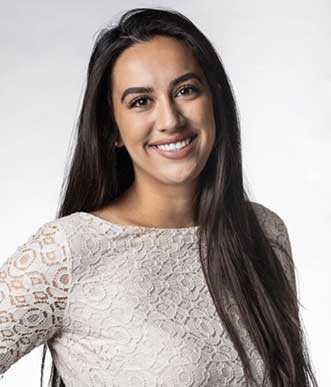
About the author:
Jaya Rastogi (she/they) is a Master of Science in Health Science, Technology, and Policy candidate at Carleton University. Her research focuses on health inequities and the impacts of racism, heteronormativity, and the gender binary. Their thesis, under the supervision of Dr. Jennie Haw, explores the views of Canadian young adults on blood donor screening policies regarding gender identity and gay, bisexual and other men who have sex with men (gbMSM). Jaya is passionate about research that creates a more equitable health system and is currently a research assistant for a community-based research project exploring sickle cell disease and barriers and enablers to blood donation for Black young adults. Jaya is also passionate about making research more accessible through knowledge mobilization.
Canadian Blood Services – Driving world-class innovation
Through discovery, development and applied research, Canadian Blood Services drives world-class innovation in blood transfusion, cellular therapy and transplantation—bringing clarity and insight to an increasingly complex healthcare future. Our dedicated research team and extended network of partners engage in exploratory and applied research to create new knowledge, inform and enhance best practices, contribute to the development of new services and technologies, and build capacity through training and collaboration. Find out more about our research impact.
The opinions reflected in this post are those of the author and do not necessarily reflect the opinions of Canadian Blood Services nor do they reflect the views of Health Canada or any other funding agency.